



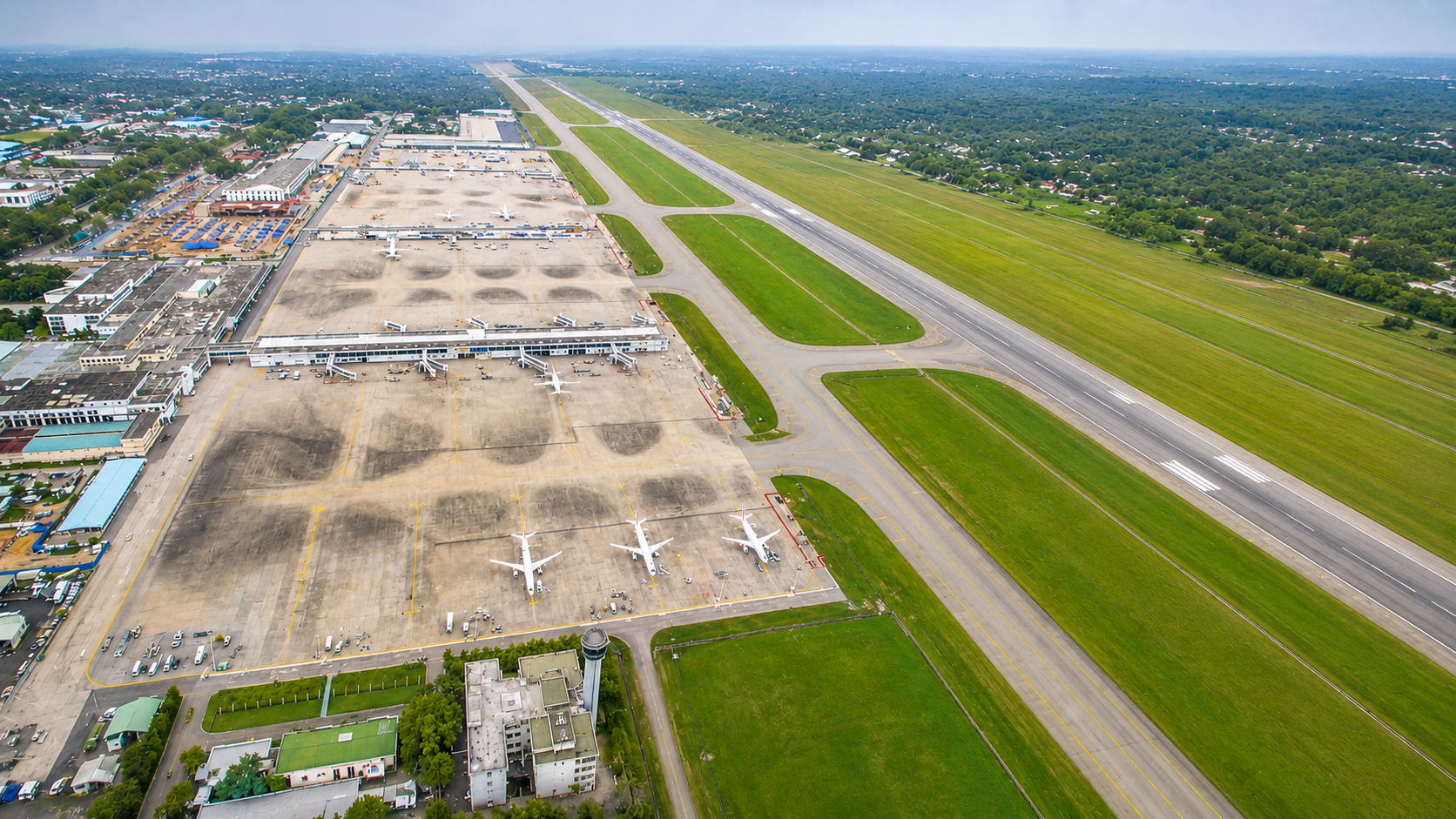
Sri Lanka’s main airport, the Bandaranaike International Airport (BIA) in Katunayake, will not see a second runway built until at least 2055 following recommendations from an international master plan, Deputy Minister of Ports and Civil Aviation Janitha Ruwan Kodithuwakku said.
Instead of constructing a new runway, the airport will undergo modifications to its existing runway, he said.
Sri Lanka had planned to expand the main airport with a second runway two decades back, but the project never took off.
Deputy Minister Kodithuwakku said the final master plan for BIA is currently in its final stage, and Sri Lanka has hired an international party.
“They (international party) recommended that we will not need a second runway up until 2055, but we will have to do some modification for the existing runway,” Kodithuwakku told EconomyNext
He did not name the international party.
The BIA in Katunayake, functioning as Sri Lanka’s primary gateway for international commerce and tourism, is facing severe operational bottlenecks due to its reliance on a single, aging runway.
Navigating a rapid post-crisis surge in passenger arrivals and a growing role as a South Asian transit hub, BIA’s current 3,350-meter asphalt runway operates near absolute capacity.
This creates severe congestion and leaves the island’s aviation network highly vulnerable; any routine maintenance, emergency landing, or technical glitch can instantly trigger a total shutdown of national airspace.
To break free from this vulnerability and support the world’s largest commercial aircraft, such as the Airbus A380, the government’s long-term Phase II Master Plan includes constructing a second parallel runway, projected to stretch up to 4,000 meters.
Finalizing the technical blueprints and overcoming the land acquisition challenges for a second runway remains the ultimate hurdle required to transform BIA into a truly resilient, dual-runway aviation hub capable of handling over 15 million passengers annually.
Former Director General of the Civil Aviation Authority, Themiya Abeywickrama, explained that BIA’s single runway operates far below its maximum capacity due to institutional deficiencies, such as a lack of operational confidence among air traffic control (ATC) staff and a lack of high-speed exit taxiways.
While global hubs safely clear aircraft within one to two minutes, BIA enforces an inefficient seven-minute separation between landing aircraft, he said.
He said even London’s Gatwick airport which handled a staggering 263,049 air traffic movements in 2025 had primarily just one runway.
“Gatwick also is single runway operation. They handle about..between 45 -50 departures within an hour. And similar number of landings onto the single runway,” Abeywickrama said.
Furthermore, the absence of rapid-exit taxiways (RETs) at BIA forces aircraft to slow down to a near-standstill on the active runway to make sharp 90-degree turns into terminal slots, creating a severe traffic bottleneck.
“And main reason for that is Colombo airport does not have something called high speed taxiways. Now, high speed exit taxiways mean from the runway to get out of the runway,” Abeywickrama said.
Abeywickrama warned that building a parallel runway too close to the existing one would serve no real operational purpose and upgrading the existing runway would cost just fractions of what building another runway would take.
Source: Economy Next

