



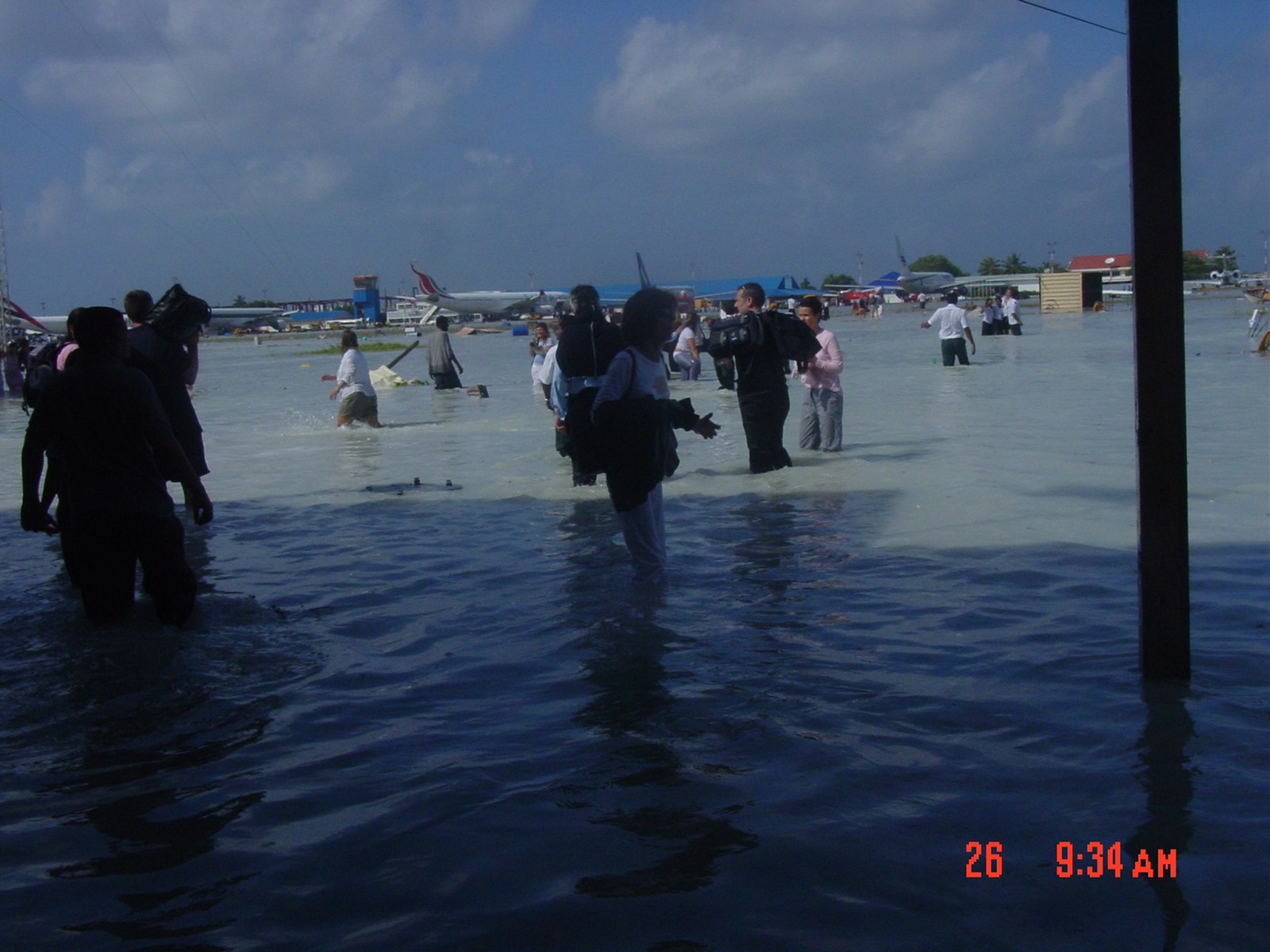
26th December 2004 remains one of the darkest days in modern history. The Indian Ocean Tsunami, triggered by a massive undersea earthquake off the coast of Sumatra, claimed over 230,000 lives across Asia. As we mark 21 years since the tragedy, Aviation Voice reflects on how the disaster affected aviation in our region and how aviation became a lifeline in rescue, relief and recovery.
When the Tsunami Struck: Aviation at a Standstill
The tsunami caused widespread devastation across coastal regions of Indonesia, Sri Lanka, Thailand, India, and the Maldives. Aviation infrastructure, often located near coastlines, was among the first to be hit.
Maldives – Malé International Airport
Velana International Airport (then known as Malé Int’l Airport) was severely affected.
☑️ Runways and taxiways were flooded
☑️ Navigation and ground support equipment were damaged
☑️ Airport operations were temporarily suspended
For an island nation dependent almost entirely on air transport, the disruption was critical. Aviation was not just about connectivity, it was about survival.
Indonesia – Aceh and Surrounding Regions
Indonesia suffered the heaviest losses. Airports near Aceh, close to the earthquake’s epicenter, were badly damaged or rendered unusable. Several airstrips were submerged, isolating entire regions at a time when help was most urgently needed.
From Grounded to Lifeline: Aviation in Rescue and Relief
Once initial damage assessments were completed, aviation rapidly transformed from a victim of the disaster into the primary tool for humanitarian response.
How Aviation Helped Save Lives
☑️ Military and civilian aircraft delivered emergency aid, food, water and medical supplies
☑️ Helicopters rescued stranded survivors from isolated coastal and island communities
☑️ Cargo aircraft enabled mass int’l relief efforts within days
☑️ Medical evacuation flights transported critically injured victims to hospitals
☑️ Airports that were partially operational became humanitarian hubs, enabling global aid agencies and foreign governments to coordinate relief operations.
Rebuilding Stronger: Lessons for Regional Aviation
The tsunami reshaped how aviation authorities across the region approach disaster preparedness:
☑️ Improved airport emergency response plans
☑️ Better coordination between civil aviation authorities and military forces
☑️ Stronger focus on resilient infrastructure in coastal airports
☑️ Enhanced early-warning and communication systems
Airports like Velana International Airport were rebuilt and upgraded, emerging stronger and more resilient to future natural disasters.
Aviation’s Role Beyond Transport
The 2004 tsunami proved that aviation is more than an industry, it is a humanitarian backbone. In moments when roads were destroyed and ports were unusable, aircraft became the fastest and sometimes the only way to reach survivors.
For the Asia-Pacific region, the tragedy underscored aviation’s vital role in:
Disaster response/ National resilience/ Regional cooperation/ Saving lives when every minute matters
SRI LANKA | From DCA to CAASL: Strengthening Aviation Governance in a Time of Crisis
The transition from the Department of Civil Aviation (DCA) to the Civil Aviation Authority of Sri Lanka (CAASL) was a major step in strengthening Sri Lanka’s aviation governance.
Established on 27 December 2002, CAASL faced its first major test just one year later during the 2004 Indian Ocean Tsunami. Despite being newly formed, CAASL played a crucial coordinating role, linking Airport & Aviation Services (Sri Lanka), SriLankan Airlines, the armed forces and emergency authorities.
At the same time, foreign humanitarian aid arrived by air, with numerous international aircraft and helicopters bringing relief supplies and rescue teams. This moment highlighted the importance of a strong civil aviation regulator in managing crisis response and ensuring lifesaving connectivity.
Remembering 26 December 2004
Twenty-one years later, we remember the lives lost and honor the courage of rescue crews, pilots, air traffic controllers, engineers and ground staff who operated under unimaginable conditions.
At Aviation Voice, we pay tribute not only to the victims, but also to the aviation community that rose in humanity’s darkest hour, proving that even after devastation, aviation helps nations rise again.
Lest we forget!
Editor | Aviation Voice


